

West Coast Seeds
West Coast Seeds (Butterfly Bush Flower)
West Coast Seeds (Butterfly Bush Flower)
Couldn't load pickup availability
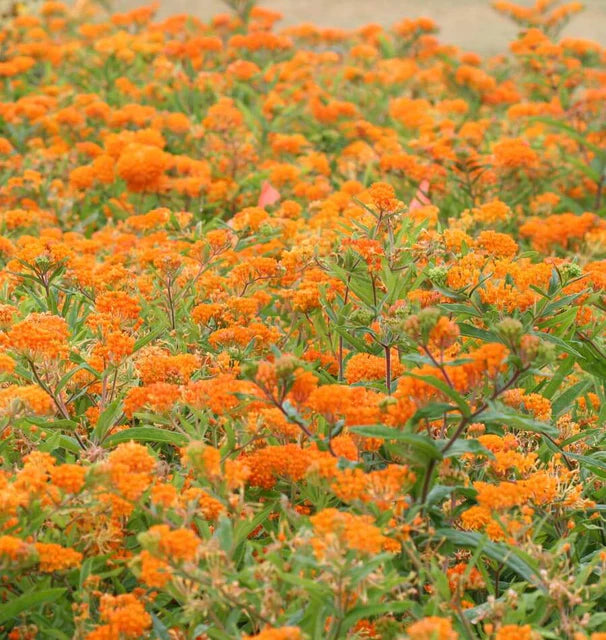
Asclepias tuberosa. Butterfly Bush Milkweed seeds, sometimes called Orange Milkweed, is a hearty perennial intensely attractive to butterflies and other beneficial garden insects. It is highly drought resistant, so useful for xeriscaping. Unlike other members of the Milkweed family, Butterfly Weed does not issue a milky sap when broken. Waxy green stems to 70cm (27") tall are topped by vivid orange flower clusters. Grown in small clusters, this plant attracts butterflies like no other, even in urban gardens. Flowers are followed by exotic looking fruits that release easy-to-harvest seeds. All milkweeds are useful, nectar rich food plants for butterflies, including the Monarch butterfly.
This is not the milkweed species that is used as a food plant by the Monarch caterpillar. That plant is A. incarnata, or Swamp Milkweed. Download our Butterfly Milk Fact Sheet.
Ontario residents who purchase Butterfly Bush Milkweed Seeds see 100% of the proceeds of their packets (any size) donated to support Birds Canada to help protect birds and their habitats across Canada. On now until December 31st.
NOTE: All parts of the plant are harmful if swallowed. Asclepias leaves can be toxic to chickens, so plant out of range of foraging flocks.
Perennial
| Latin Name |
Ascelpias sp. |
| Difficulty | Easy |
| Exposure |
Full sun |
| Days To Sprout | 7-35 Days |
| Starting |
Barely cover the small seeds using sterilized seed starting mix. Space transplants 30-60cm (12-24″) apart. |
| Growing |
For many years several Asclepias species were listed as invasive weeds because of their sometimes aggressive spreading by underground rhizomes and their giant, dandelion-like seeds. The seeds emerge from very conspicuous pods which are easily removed before they dry and crack. As the population of wild Asclepias diminished, so did the populations of many butterflies that depend on them as food and nursery plants (including the endangered Monarch). Now that they have been de-listed, we encourage home gardeners to grow them with the advance knowledge that they can spread. Try growing them in a large container like a half barrel, and be conscious of the seed pods as they develop. In short, please be responsible with Asclepias species. Note: All parts of the plant are harmful if eaten. Flowers are not edible. |
Perennial
Vivid orange flower clusters
Waxy green stem to 70cm (27") tall
Attracts butterflies
Non-invasive species